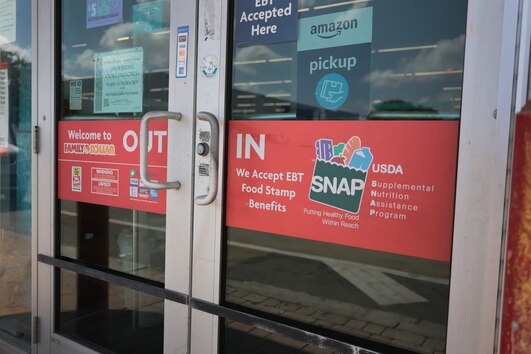
(NEW YORK) — Major changes are coming on Oct. 1 for the tens of millions of Americans who rely on the Supplemental Nutrition Assistance Program (SNAP) for food assistance from the federal government.
In the short term, most families will see a slight bump in their monthly payments to help afford groceries. But in the coming months, households will face stricter eligibility requirements and changes to how the benefits are administered that could ultimately result in far fewer benefits.
An estimated five million Americans — including more than 1 million children — have already lost SNAP assistance over the past year as part of President Donald Trump’s signature tax and spending law, according to the Center on Budget and Policy Priorities.
Short-term boost in benefits
Every year on Oct. 1, the federal government adjusts its monthly SNAP benefits to account for inflation. These cost-of-living adjustments apply across all states.
For a typical single-person household in one of 48 states (not including Alaska or Hawaii), checks will go from a maximum of $298 to $306 per month. That’s an extra $8 monthly.
For a family of four, checks will go from $994 to $1,023 per month. That’s an extra $29 per month, or $348 per year.
These inflation adjustments are intended to help families keep up with the rising cost of food. Grocery prices are up 2.2% in the past year.
Big funding changes
While these adjustments will help alleviate some cost pressures for current SNAP recipients, a major overhaul to the program is resulting in fewer people receiving benefits.
As part of the “One Big Beautiful Bill Act,” states are required to pay for a larger share of SNAP administrative costs while the federal government pays less. Now, states will be required to cover 75% of those administrative costs — a 25% increase. This change takes effect Oct. 1 and will leave states with millions of dollars of additional costs to cover.
Additional cost shifts are also looming for states. Starting in 2027, states with a SNAP recipient error rate above 6% would also be on the hook for funding a portion of SNAP benefits themselves — expected to cost states hundreds of millions of dollars extra per year.
In anticipation of these sweeping changes, some states are already seeing a big drop in SNAP enrollment.
According to an analysis from the Center on Budget and Policy Priorities, Arizona, Florida and Louisiana were some of the states that saw the biggest change in participation, with Arizona seeing its numbers cut nearly in half.
Changing eligibility requirements
The Republican-backed law has already imposed stricter requirements on SNAP recipients.
Under the law, work requirements apply to able-bodied adults without dependents aged 18 to 64, up from the previous age limit of 54.
The law also changed work requirements for families responsible for a dependent. Now, families with children age 14 and older are no longer eligible for an exemption from those work requirements.
Copyright © 2026, ABC Audio. All rights reserved.